
|

|
|
|
|

|
|
|
|


Health & Safety Executive (HSE)
Railtrack slated in accident report 10 Mar 99 Railtrack could face prosecution over state of railway 02 Mar 98 Railtrack's Shame
Seven days . . . . . . web focus on rail safety and accidents in the last week |
||||
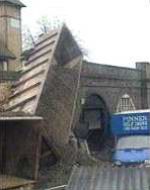
Management failures underlying cause of Burntisland derailment - HSEHealth & Safety Executive : Saturday, July 10, 1999The derailment of an English Scottish & Welsh Railway coal train was caused by track defects, but the underlying cause was the failure of management systems of Railtrack and its contractor First Engineering Limited according to a report by the Health & Safety Executive. The EWSR train was travelling between Mossend and Longannet when 16 of its 27 wagons became derailed at Burntisland on the Firth of Forth, Scotland. The incident occurred on 8 July 1998 as the train traversed a section of track where the rails had spread. Faulty installation work in the 1960's was to blame, when a particular combination of fastening was used - a two hole base plate and a concrete sleeper. This defect was hidden by the fastenings which secure the rail to the sleeper. The HSE's HM Railway Inspectorate investigation faulted the management systems of both companies. They "did not analyse information they had on the condition of the track, and so did not spot and act on the worsening track spread".
The "lessons to be learnt" are reiterated:
Comment on this item... |



|
 This file last updated: Saturday, 04-Sep-1999 08:48:45 EDT